What is Going on in West Oakland Bay?
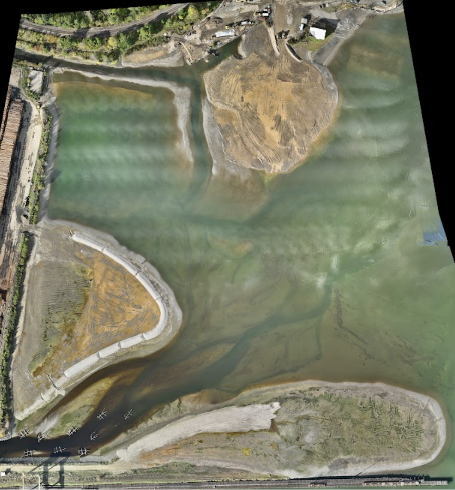
If you live in Shelton or travel through commonly for work or pleasure, you have probably seen a lot of heavy equipment moving around sediment in the harbor. You may also have experienced an uptick in the number of trucks accessing the Shelton Yacht Club parking lot, on the North side of the harbor along Highway 3, or turning into the Sierra Pacific Industries (SPI) mill’s delivery access entrance along Front Street. So, what is going on out in the harbor? To answer that question briefly, the work going on is the culmination of years of planning and over a decade of companion work in the harbor to remove contaminants and shoreline armoring and reconstruct saltmarsh habitat in support of our region’s salmon and other marine species. The project is managed by the South Puget Sound Salmon Enhancement Group (SPSSEG) in partnership with the Squaxin Island Tribe. The work is being conducted with a myriad of state and federal grant funding on Shelton Yacht Club property. Access to the south and west lobes are through SPI mill property and SPI has been an exemplary partner throughout all stages of habitat reconstruction. Let’s dig into it a bit.

Saltmarshes are a type of wetland that are commonly inundated by salt water along low energy shorelines and at estuarine sites (where freshwater rivers and streams meat marine waters). Saltmarsh vegetation differs based on the tidal elevation and the salt tolerance of the plants and saltmarshes (and estuaries) create vital habitat that support many species of salmonids, forage fish, marine mammals, waterfowl, and an untold number of micro and macro-invertebrates. Our work focuses on supporting salmon, as these iconic species experiences ever increasing challenges at all life stages and locations, though habitat that supports salmon support most other marine species as well. These productive habitats are vital to the food web within the Puget Sound, simultaneously acting as nurseries, feeding grounds, shelter, and long-term housing for countless animals. Saltmarshes also provide ecosystem services by sequestering carbon and preventing coastal erosion.
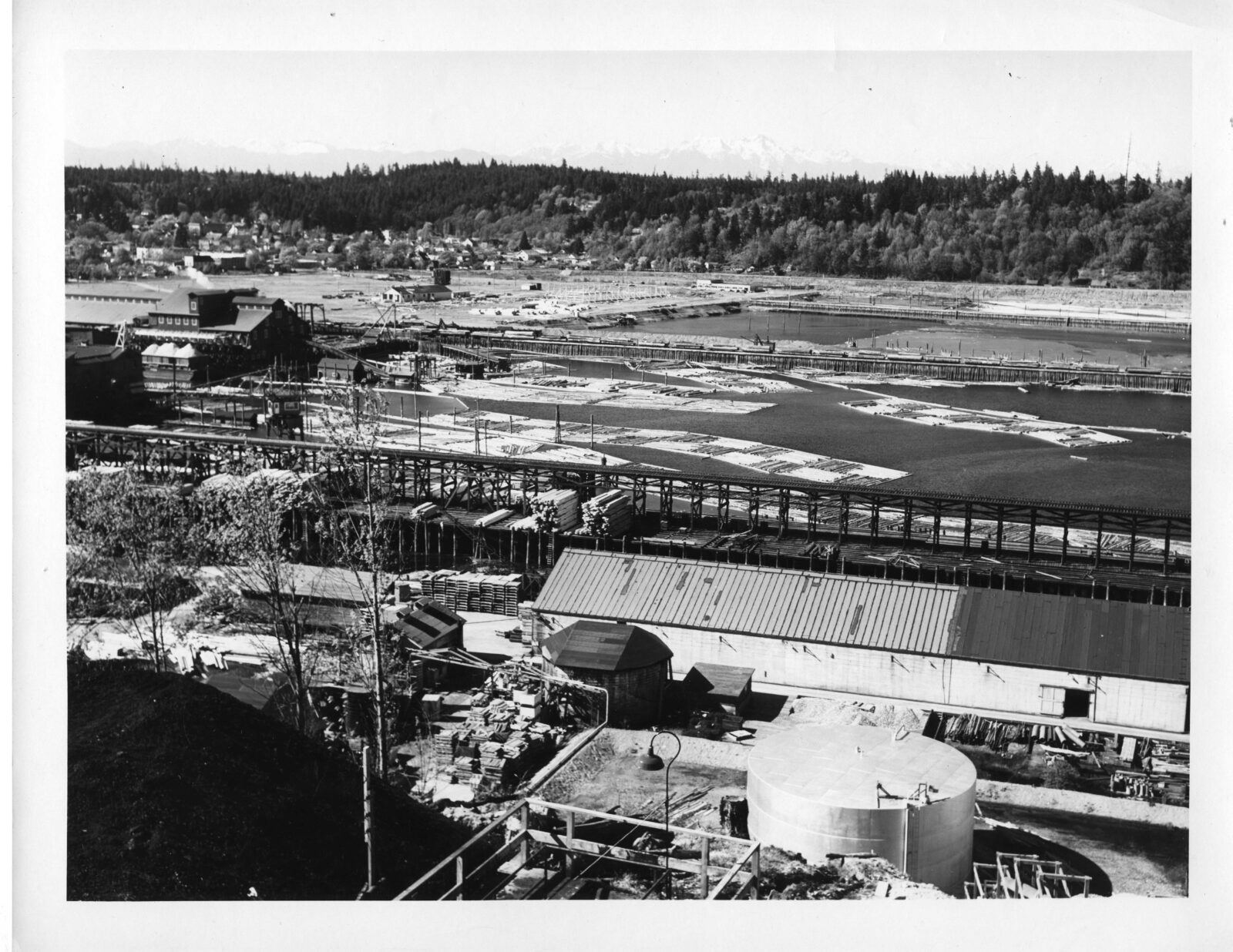
Given the low profile of the ecosystems, easy access to saltwater (and commonly freshwater), and an abundance of other natural resources that commonly surround them, it is no surprise that many saltmarshes and estuaries have become the location of historic or current industry. In Shelton for instance, the historic saltmarsh existed all the way from where the current habitat is being built through the SPI (formerly Simpson) mill, ending roughly at Front Street. Past restoration efforts in the harbor have seen significant contaminant removal and the construction of the south and west saltmarsh lobes on what had previously been largely mud flats.
Because saltmarshes require specific tidal inundation intervals and elevations, the first step in reconstructing the habitat is to create a sediment prism that exists at the correct inter-tidal elevation, with constituent sediment that resembles other regional salt marshes in size and nutrients (The Bayshore Preserve is a great example). This current round of construction seeks to remove contaminants and hard armoring along the north shoreline, build a north lobe of future saltmarsh habitat, reinforce the right bank of Shelton Creek, and amend the previously built south and west lobes so that they are in line with the best available science that reflect the lessons learned studies conducted on previous work. In total across all three saltmarsh lobes this construction will place over 120,000 tons of sediment, with the construction of the north lobe of saltmarsh habitat consisting of almost ¾ of that total (90,000 tons). This will result in a 4.5 acre north lobe of saltmarsh habitat and amendments to almost 10 acres of the south and west lobes. Construction will be completed on the south and west lobes this year, with work pushing into November or December. The North lobe will be brought to 8’ NAVD88, with the remainder of the construction to be completed in the summer of 2027. The extended timeline is to allow for settlement of material on the north lobe, which is constructed over a cap of clean material that is meant to sequester underlying contaminated sediments present in the harbor. It is important that the cap and the underlying contaminants are not displaced, which requires slow placement and careful tracking.
Once completed, saltmarsh vegetation will be planted on the south and west lobes in the fall/winter of 2027, with the north lobe to follow in the coming years. Still, saltmarshes are characterized by the slow build up of sediments and it may take many years yet for the projects goals to be realized, namely a thriving and well vegetated saltmarsh at the heart of downtown Shelton. As with terrestrial riparian vegetation which can take decades to reach their full potential and provide riparian cover to water bodies, we should not expect plants to establish overnight. With time and thoughtful tending, the constructed saltmarsh habitats will vegetate and continuously improve habitat conditions for our salmonids and all of the marine species of the South Puget Sound.